
Prototype CNC Machining: Quick-Turn Prototyping Services
Fun fact in excess of forty percent of product engineering teams cut launch timelines by half using quick-turn prototype processes that reflect manufacturing?
UYEE Prototype delivers a U.S.-focused capability that quickens validation testing with instant price quoting, auto DfM checks, and shipment tracking. Customers can obtain components with an typical lead time as fast as 2 days, so teams check form/fit/function ahead of tooling for titanium machining.
The service lineup features multi-axis CNC milling and high-precision turning plus sheet metal, SLA 3D printing, and fast molding. Finishing and post-processing come built-in, so parts come test-ready and stakeholder demos.
This pipeline keeps friction low from drawing upload to final parts. Extensive material choices and manufacturing-relevant quality levels let engineers perform reliable mechanical tests while keeping schedules and budgets consistent.
- UYEE Prototype supports U.S. companies with rapid, manufacturing-like prototyping solutions.
- On-demand quotes and auto manufacturability checks accelerate decision-making.
- Typical lead time can be down to two days for numerous orders.
- Challenging features supported through advanced milling and precision turning.
- >>Integrated post-processing delivers parts ready for demo or testing.
Precision Prototype CNC Machining Services by UYEE Prototype
An attentive team with a turnkey process positions UYEE Prototype a reliable supplier for accurate prototype builds.
UYEE Prototype delivers a clear, end-to-end pathway from file upload to finished parts. The system enables Upload & Analyze for immediate pricing, Pay + Manufacture with secure checkout, and Receive & Review via web tracking.
The skilled team guides DfM, material selection, tolerance strategy, and finishing approaches. 3–5 axis equipment and in-line inspections ensure repeatability so test parts hit both functional and appearance requirements.
Engineering teams gain integrated engineering feedback, scheduling, quality checks, and logistics in one consolidated package. Daily factory updates and hands-on schedule management prioritize on-time delivery.
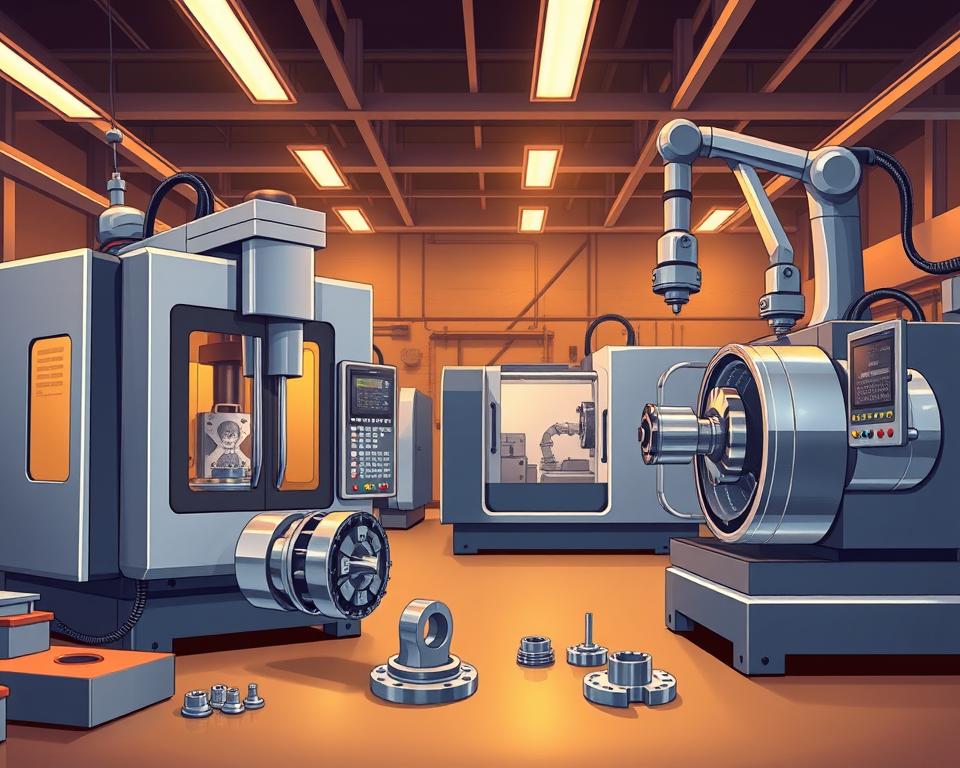
- End-to-end delivery: one source for quoting, production, and delivery.
- Reliable repeatability: documented checkpoints and standard operating procedures drive consistent outcomes.
- Scalable support: from individual POC builds to multi-piece batches for system-level evaluation.
Prototype CNC Machining
Rapid, production-like machined parts cut weeks from R&D plans and expose design risks early.
Machined prototypes speed iteration by skipping long tooling lead times. Teams can commission small runs and verify form/fit/function in days instead of many weeks. This compresses schedules and reduces late-stage surprises before mass production.
- Quick iteration: avoid mold waits and validate engineering decisions quickly.
- Load testing: machined parts provide tight dims and stable material properties for load and heat tests.
- 3D printed vs CNC: additive is quick for concept models but can show directional weakness or reduced strength in rigorous tests.
- Molding trade-offs: injection and molded runs make sense at volume, but tooling expense often is heavy upfront.
- When to pick this method: high-precision fit checks, assemblies needing exact feature relationships, and controlled A/B comparisons.
UYEE Prototype helps select the right approach for each stage, optimizing time, budget, and fidelity to de-risk production and advance key milestones.
CNC Capabilities Tailored for Fast Prototyping
High-end milling and turning assets let teams convert complex designs into testable parts at speed.
3-, 4-, and full 5-axis milling for intricate shapes
UYEE operates 3-, 4-, and full 5-axis milling centers that unlock undercuts, compound angles, and freeform surfaces for enclosures and mechanisms.
3–5 axis milling minimizes fixturing and maintains feature relationships true to the original datum strategy.
Precision turning complements milling for coaxial features, thread forms, and precision bores used in shafts, bushings, and fittings.
Deburring, edge-breaking, and secondary finishing ensure parts are safe to handle and test-ready.
Tight tolerances and surface accuracy for fit/function testing
Cutter path strategies and tuned cutting parameters balance speed with dimensional accuracy.
Machine selection and advanced medical device prototyping fixturing increase repeatability across multiple units so test data stays trustworthy.
UYEE matches tolerances to the test objective, prioritizing the features that drive function and assembly performance.
| Capability | Benefit | When to use |
|---|---|---|
| 3-axis | Fast roughing and simple parts | Simple brackets and plates |
| 4-/5-axis | Undercuts, compound angles | Organic forms |
| Turning | Tight runout control | Rings and sleeves |
From CAD to Part: Our Simple Process
A cohesive, end-to-end workflow takes your CAD into test-ready parts while minimizing wait time and rework. UYEE Prototype manages every step—quote, DfM, build, and delivery—so your project remains on track.
Upload and analyze
Upload a CAD file and obtain an instant quote plus auto DfM checks. The system calls out tool access, thin walls, and tolerance risks so designers can address issues pre-build.
Pay and manufacture
Secure checkout confirms payment and sets an immediate schedule. Many orders start quickly, with average lead time as fast as two days for typical prototyping runs.
Receive and review
Online tracking displays build status, shipping estimates, and inspection reports. Teams collaborate on quotes, drawings, and notes in one place to speed internal approvals and keep stakeholders aligned.
- Unified flow for one-off and multi-variant makes comparison testing straightforward.
- Automated DfM cuts rework by flagging common issues early.
- Live status improve visibility and improve project predictability.
| Step | What happens | Benefit |
|---|---|---|
| Upload + Analyze | Immediate pricing and automated DfM report | Faster design fixes, fewer revisions |
| Pay & Manufacture | Secure checkout and priority scheduling | Fast turn; average 2 days for many orders |
| Receive & Review | Web tracking, documentation, team sharing | Clear delivery estimates and audit trail |
Materials for Prototyping That Reflect Production
A materials strategy that matches production grades supports valid test data and shortens timelines.
UYEE stocks a broad portfolio of metals and engineering plastics so parts track with final production. That alignment permits accurate strength, stiffness, and thermal evaluations.
Metals for strength, corrosion, and heat
Available metals include Aluminum 6061/7075/5052 for lightweight structures, stainless 304/316/316L for wet environments, brass C360, copper C110, titanium Gr5, mild and alloy steels, and a range of tool steels and spring steel for demanding loads.
Plastics for high-temperature needs
Plastics offered include ABS (and FR), PC, Nylon 6/12, POM, PP, PE, PMMA, PTFE, PEEK, PVC, FR4, and TPU. Selections address impact resistance, transparency, chemical stability, and heat deflection.
How material choice affects tests
Matching prototype CNC machining material grade enhances tolerance holding and surface quality, so fit and finish results reflect production reality. Hard alloys or filled plastics may affect achievable cosmetic finish and machining marks.
| Category | Example Grades | When to Use |
|---|---|---|
| Light metal | Al 6061 / 7075 | General structural parts |
| Corrosion resistance | SS 304 / 316L | Marine or chemical exposure |
| High-performance | Titanium Gr5 / Tool steels | Aerospace-grade needs |
| Engineering plastics | PC, PEEK, Nylon | Mechanical and thermal demands |
UYEE works with you to balance machinability, cost, lead time, and downstream finishing to choose the right material for representative results.
Surface Finishes and Aesthetics for Production-Like Prototypes
Selecting an appropriate finish turns raw metal into parts that match production feel.
Standard finishes provide a quick route to functional testing or a clean demo. Standard as-milled maintains accuracy and speed. Bead blast adds a uniform matte texture, and Brushed finishes add directional grain for a professional, functional look.
Anodizing improves hardness and corrosion resistance and can be dyed for color. Black oxide reduces reflectivity and provides mild protection. Conductive oxidation maintains electrical continuity where grounding or EMI paths are needed.
Presentation painting and color
Spray painting provides matte/gloss choices plus Pantone matching for color fidelity. Painted parts can simulate final color and feel for stakeholder reviews and investor demos.
- Finish choice influences perceived quality and helps mirror production cosmetics.
- Achievable surface quality depends on base metal, toolpath, and handling sensitivity.
- UYEE Prototype provides a range of finishing paths—from rugged textures for test articles to show-ready coatings for demos.
| Finish | Benefit | When to Use |
|---|---|---|
| As-milled | No added process time | Fit checks |
| Bead blast / Brushed | Uniform matte / brushed grain | Aesthetic surfaces |
| Anodize / Black oxide | Wear resistance / low glare | Outdoor or harsh use |
Quality Assurance That Meets Your Requirements
Quality systems and inspection workflows ensure traceable results so teams can trust data from tests and schedules.
ISO-aligned controls, first article compliance, CoC and material traceability
ISO-aligned procedures guide incoming material verification, in-process inspections, and final acceptance to fulfill specs. Documented controls improve consistency and support repeatable outcomes across batches.
First Article Inspection (FAI) support establishes a dimensional baseline for critical builds before additional units run. Measurement strategies include CMM reports, calibrated gauges, and targeted feature checks to preserve precision and accuracy where it is critical.
Certificates of Conformance and material traceability are provided on request to serve regulated manufacturing and procurement needs. Material and process trace logs show origin, heat numbers, and processing steps for compliance.
- Quality plans are tailored to part function and risk, weighing rigor and lead time.
- Documented processes support repeatability and reduce variability in test outcomes.
- Predictable logistics and monitored deliveries sustain on-time performance.
Intellectual Property Protection You Can Trust
Security for confidential designs starts at onboarding and extends through every production step.
UYEE uses contractual safeguards and NDAs to hold CAD files, drawings, and specs confidential. Agreements define handling, retention, and permitted use so your development work stays protected.
Controlled data handling methods reduce exposure risk. Role-based access, audit logs, and file traceability indicate who viewed or modified designs during quoting, manufacturing, and shipping.
Strict onboarding and data controls
Vendors and staff undergo strict onboarding with contractual obligations and training on confidentiality. Background checks and defined access limits align the entire team to protection methods.
- Secure file transfer and encrypted storage for additive-ready and machining-ready files.
- Traceable change history and signed NDAs for all external partners.
- Documented processes that govern quoting, production, inspection, and logistics.
| Control | How it protects IP | When it applies |
|---|---|---|
| NDAs & contracts | Define legal obligations and remedies | From onboarding through project close |
| Access controls | Restrict access and track events | Quoting, CAM prep, manufacturing |
| Encrypted transfer & storage | Secure data at rest and in transit | Uploading, sharing, archival |
| Trained team | Promotes consistent secure handling | All service and development phases |
Industry Applications: Validated Across Demanding Use Cases
Mission-critical programs in medicine, aerospace, and defense demand accurate parts for valid test results.
Medical and dental teams employ machined parts for orthotics, safe enclosures, and research fixtures that need tight tolerances.
Precise metal selection and controlled finishes lower risk in clinical tests and regulatory checks.
Automotive
Automotive applications include fit/function interiors, brackets, and under-hood components subject to heat and vibration.
Fast iterations support assembly verification and service life before locking in production tooling.
Aerospace and aviation
Aerospace uses accurate manifolds, bushings, and airfoil-related parts where small deviations impact airflow and safety.
Inspection plans focus on critical dimensions and material traceability for flight testing readiness.
Defense and industrial
Defense and industrial customers need durable communication components, tooling, and machine interfaces that hold up under stress.
UYEE Prototype tunes finish and inspection scope to match rugged operational demands and procurement standards.
Consumer electronics and robotics
Consumer electronics and robotics need fine features, cosmetic surfaces, and precise mechanisms for easy assembly and user experience.
Short runs of CNC machined parts accelerate design validation and support production-intent refinement before scaling.
- Industry experience surfaces risks early and propose pragmatic test plans.
- Material, finish, and inspection are tuned to each sector’s operating and compliance needs.
- UYEE Prototype serves medical, automotive, aerospace, defense/industrial, consumer electronics, and robotics customers across the U.S.
| Industry | Typical applications | Key considerations |
|---|---|---|
| Medical & Dental | Orthotics, enclosures, fixtures | Tight tolerances, biocompatible finishes |
| Automotive | Brackets, fit checks, under-hood parts | Heat, vibration, material durability |
| Aerospace | Manifolds, bushings, flight components | Dimensional accuracy, traceability |
| Consumer & Robotics | Housings, precision mechanisms | Cosmetic finish, fine features |
Design for Machining: CNC DfM Guidelines
A CNC-aware approach focuses on tool access, rigid features, and tolerances that support test objectives.
Automatic DfM checks at upload flags tool access, wall thickness, and other risks so you can refine the 3D model pre-build. UYEE helps match multi-axis selection to the geometry instead of forcing a 3-axis setup to mimic a 5-axis method.
Geometry, tool access, and feature sizing for 3–5 axis
Keep walls appropriately thick and features within cutter reach. Minimum wall thickness varies by material, but designing wider webs reduces chatter and tool deflection.
Use radiused fillets at internal corners to allow proper cutter engagement. Deep, small pockets should be designed with access ramps or additional setups in mind.
Tolerance planning for appearance vs functional parts
Separate cosmetic and functional tolerances early. Tight form tolerances belong on critical interfaces. Looser cosmetic limits reduce cycle time and reduce cost.
Define datum schemes and tolerance stacks for assemblies and kinematic mechanisms. Document measurement plans for critical features so acceptance criteria are well-defined before the first run.
- Set minimum wall thickness, feature depths, and fillets to improve tool access and stability.
- Use 5-axis when feature relationships or undercuts need single-setup accuracy; choose simple fixturing when speed matters.
- Specify best practices for threads, countersinks, and small holes to limit deflection and ensure repeatable quality.
- Early DfM reviews reduce redesign cycles and accelerate prototyping iterations.
| Focus | Design Rule | Benefit |
|---|---|---|
| Wall & Fillet | Wider webs, radiused corners | Reduced deflection, better surface finish |
| Setups | Prefer 5-axis for complex relations | Fewer fixtures, preserved geometry |
| Tolerances | Functional vs cosmetic | Cost control, faster cycles |
Speed to Market: Lead Times and Low-Volume Runs
Expedited builds tighten timelines so engineers can move from concept to test sooner.
UYEE offers rapid prototyping with average lead times as fast as two days. Rapid scheduling and standardized setups compress lead time for urgent EVT and DVT builds.
Low-volume runs connect to pilot and enable assembly testing or limited market trials. Short-run parts keep the same inspection, documentation, and traceability as single-unit work.
Teams can quickly reorder or revise as development learning accumulates. Tactical use of CNC allows deferring expensive tooling until the design matures, minimizing sunk cost.
Reliable delivery rhythm helps synchronize test plans, firmware updates, and supplier readiness so programs remain on track.
| Attribute | Typical Range | When to Use |
|---|---|---|
| Lead time | 1–5 days (avg 2 days) | Urgent engineering builds |
| Run size | 1–200 units | Validation, pilot trials |
| Quality & docs | FAI, CoC, inspection reports | Regulated tests, production handoff |
| Flexibility | Fast reorders, design revisions | Iteration-driven development |
CNC vs Injection Molding and 3D Printing for Prototypes
Selecting the best process can cut weeks and costs when you move from concept to test parts.
Small batches require a practical decision: avoid long waits or invest in tooling for lower unit cost. For many low-quantity runs, machined parts surpass molds on schedule and upfront cost. Printing is quickest for concept visuals and complex internal lattices, but may not match mechanical performance.
Cost, time, and fidelity trade-offs at low quantities
Injection molding demands tooling that can take many weeks and significant budget in cost. That makes it uneconomical for small lots.
Machined parts avoid tooling fees and often deliver better dimensional control and stronger bulk properties than many printed parts. Chips from metal removal are recyclable to minimize scrap.
- Time: printing for hours to days; machining for days; injection may take weeks to months.
- Cost: low unit counts favor machining or printing; molding only pays off at volume.
- Fidelity: machining delivers consistent tolerances and surface finish; printing can show anisotropy and layer artifacts.
When to bridge from CNC prototypes to molding
Plan a bridge to injection when the design is frozen, tolerances are locked, and material choice is finalized. Use machined parts to prove fit, function, and assembly before committing to a mold.
Early DfM learnings from machined runs reduce mold changes and improve first-off success. Right-size raw stock, optimize nesting, and recycle chips to enhance sustainability during the transition.
| Attribute | Best for | Notes |
|---|---|---|
| Printing | Ultra-fast concepts, complex lattices | Low strength; good for visual and some functional tests |
| Machining | Small lots, tight tolerances, mechanical tests | Avoids tooling; recyclability reduces waste |
| Injection | High-volume production | High upfront tooling; lowest unit cost at scale |
Beyond CNC: Complementary On-Demand Manufacturing
Modern development benefits from a suite of on-demand methods that match each milestone.
UYEE Prototype broadens capability with sheet metal, high-accuracy 3D printing, and rapid injection molding to cover the full range of development needs.
Sheet metal fabrication uses laser cutting and bending for fast flat-pattern iterations. It is ideal for enclosures and brackets with formed features that are difficult or costly to mill.
3D printing and SLA
SLA printing delivers smooth surfaces and fine detail for concept models and complex internal geometries. It supports fast visual checks and fit trials before committing to harder materials.
Rapid injection molding
Rapid tooling, family molds, and multi-cavity options enable bridging to higher volumes once designs stabilize. Overmolding can add soft-touch or bonded layers in the same run.
Multi-process programs often combine CNC parts with printed components or sheet metal to speed subsystem integration. Material and process selection focus on validation goals, schedule, and budget.
- Sheet metal: fast iterations for formed parts and brackets.
- SLA printing: high-accuracy surfaces and internal detail.
- Rapid molding: cost-effective bridge when volumes justify tooling.
| Method | Best use | Key benefit |
|---|---|---|
| Sheet metal | Enclosures, brackets | Fast flat-pattern changes |
| SLA printing | Concept and internal features | Smooth finish, fine detail |
| Rapid molding | Bridge volumes | Production-like parts, repeatability |
Get an Instant Quote and Begin Now
Upload your design and get instant pricing plus actionable DfM feedback to cut costly revisions.
Upload files for guaranteed pricing and DfM insights
Send CAD files and get an instant, guaranteed quote with auto DfM that highlights tool access, thin walls, and tolerance risks.
The platform locks pricing and schedule so your project can move into production planning without delay.
Work with our skilled team for prototypes that look and perform like production
Our team collaborates on tolerances, finishes, and materials to make product builds mirror final intent.
UYEE handles processes from scheduling through inspection and shipment, reducing vendor overhead and keeping every step transparent.
- Upload CAD for guaranteed pricing and rapid DfM feedback to reduce risk.
- Collaborative reviews synchronize tolerances and finishes to the product goal.
- Secure payments, online tracking, and clear status updates maintain visibility through delivery.
| What | Benefit | When |
|---|---|---|
| Instant quote | Guaranteed pricing | Start project fast |
| DfM report | Fewer revisions | Design validation |
| Order tracking | Full visibility | On-time delivery |
Start today to shorten lead times and get production-intent, CNC machining work, including CNC machined and machined parts that aid stakeholder reviews and performance tests.
Conclusion
Bridge development gaps by using a single supplier that marries multi-axis capabilities with fast lead times and traceable quality.
UYEE Prototype’s ecosystem of CNC equipment, materials, and finishes supports rapid prototyping with production-like fidelity. Teams get access to multi-axis milling, turning, and a wide material set to match test objectives.
Choosing machining for functional work delivers tight tolerances, stable material performance, and repeatable results across units. That consistency improves test confidence and accelerates the move to production.
The streamlined process—from instant quote and auto DfM to Pay & Manufacture and tracked shipment—keeps schedule risk low. Robust quality artifacts like FAI, CoC, and traceability maintain measurement discipline and surface outcomes.
Options across CNC, printing, and injection molding allow choosing the right method at each stage. Begin your next project to get instant pricing, expert guidance, and reliable delivery that reduces time-to-market.