
Lively Color-Rich Abstract Art for Contemporary Interiors
My earliest encounter with a vivid canvas reshaped my sense of space. A plain lounge shifted in an instant after adding vibrant large abstract wall art. Suddenly, the room felt more alive, brighter, and purposeful. This experience taught me the unmatched power of color in influencing mood and initial impressions.
Up to 90% of first impressions are influenced by color, and colorful abstract art leverages this. Without relying on a specific narrative, a modern abstract painting can invigorate a dining area or bring serenity to a bedroom. It’s all about the use of color, shape, and intensity. I help clients infuse neutral spaces with personality, maintaining clean, modern designs.
Large canvas prints and oversized wall art serve as focal points, bringing structure and attention to walls. Pick size and framing carefully so the piece enhances rather than dominates. If you want a standout impact, explore Extra Large Wall Art selections.
Key Takeaways
- Color shapes first impressions and overall mood—choose art intentionally.
- Colorful abstract art offers emotional impact without literal imagery.
- Use modern abstracts sparingly for strongest results in minimal rooms.
- Extra large wall art can anchor a space—pay attention to scale and framing.
- Color-rich contemporary pieces refresh spaces with intention.
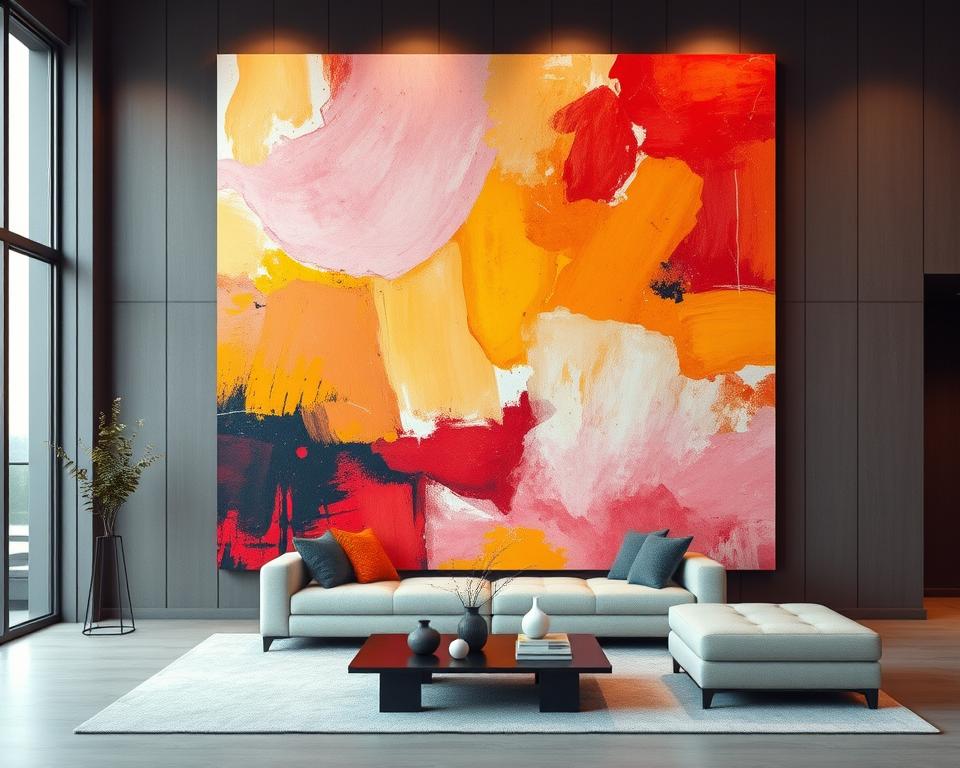
Why color matters in interior design and modern spaces
Color influences immediate first reactions. As much as 90% of initial response is color-driven, setting tone before furnishings or lighting matter. I apply color psychology to craft room-appropriate palettes.
How color drives first impressions and mood
Warm hues—red, orange—add energy. In contrast, cool tones such as blue and green induce calmness and relaxation. Bold color fields or abstracts make rooms feel lively and inviting. For private zones, softer hues support rest and focus.
What Research Says About Color and Emotion
According to The Times, abstract viewing activates diverse brain areas that foster creativity. Therefore, vibrant abstracts work well in brainstorming zones such as home offices. Meanwhile, black-and-white works add sophistication and contrast without overpowering.
Intentional Color for Atmosphere
I tailor saturation, warmth, and contrast to the space’s purpose. High saturation energizes; muted palettes soothe. Repeating art colors in accents builds cohesion. I often show clients how large pieces from Extra Large Wall Art can dramatically enhance a space’s feel through color.
Practical Steps I Use:
- Define the emotional goal: energize, calm, or inspire.
- Choose a primary hue with one–two accents.
- Anchor the design with a modern abstract painting or vibrant art piece.
- Incorporate black and white for contrast as needed.
Using Vivid Abstracts in Design
Vivid abstracts act as a dynamic voice in interiors. It speaks in color, form, and gesture rather than literal scenes. Modern abstracts balance intimacy with universality. That openness lets each viewer read it differently.
Compared to literal art, abstracts span a broader emotional range. While literal art captures specific scenes, abstract art’s essence changes with the environment. Such flexibility fits shared spaces—living rooms, foyers—well.
Without actual imagery, form, shape, and saturation speak volumes. Bold shapes attract the eye, whereas soft forms bring tranquility. Vivid hues energize; muted palettes calm. These cues engage the brain, fostering creativity and new perspectives.
Blend vivid abstracts with sleek lines to add depth and personality. Place the artwork against a neutral backdrop for impact without overcrowding. Understated fabrics help the art integrate cohesively.
- I recommend a standout modern abstract painting for each main seating area.
- Aim for a balance between scale and space for clear visibility.
- Choose vivid art that coordinates with your scheme.
Selecting the Right Color Family
I advise on choosing a palette that matches purpose and personality. Your tone family shapes mood, circulation, and the way big art presents.
I recommend warm hues—reds, oranges, and yellows—for dining and social spaces. These colors, like a bold red-and-orange abstract, spark conversation and improve energy. Avoid overload by choosing one dominant warm hue and echoing it in accents.
Cool tones, such as blues and greens, bring calmness. Perfect for bedrooms and retreats. Pairing a cool-toned painting with soft linens and matte finishes creates a peaceful, clutter-free environment.
Jewel tones, like emerald and sapphire, deliver a modern, bold statement. These deep, rich hues suggest luxury, particularly when highlighted in a single central piece of black and white painting. They excel in vibrant contemporary artwork placed over mantels, beds, or dining consoles.
- Try swatches and proofs before deciding.
- Use a hero hue and echo it with accents.
- Let neutrals host intense color to spotlight large art.
Order samples from Extra Large Wall Art or review textiles to see color in your light. Small trials ensure the chosen colorful abstract art piece matches room expectations.
Scale & Placement: Making Large Abstracts Work
Scale is a primary shaper of a room. XL pieces change both atmosphere and proportion. Always measure to keep proportions on point.
I follow the two-thirds rule above furniture. Target art width ~two-thirds of the furniture below. This ensures a visual balance. Too small reads disconnected; too large overwhelms.
Size, the Two-Thirds Rule, and Balance
For proper sizing, I start by measuring the furniture beneath the artwork, then calculate two-thirds of that size. This method ensures large abstract wall art fits well in the space without making it feel cluttered. It enhances sightlines and visual rhythm.
Best Spots for Oversized Canvases
Largest impact often appears in living/dining zones. These spaces can handle bold statements well. A large abstract anchors seating and defines dining zones in open plans. Houzz supports this approach, noting homeowners often use bold art pieces to inject personality into their spaces—an outcome I witness regularly.
Breathing Room, Eye Level & Avoiding Noise
Provide breathing room around artworks. Hanging art at eye level, which means the center should be around 57 to 60 inches off the floor, makes it easier to enjoy from various viewpoints. Spacing prevents visual clutter.
- Double-check sizes for sofas, consoles, and walls.
- Keep scale balanced: too big will dominate, too small will disappear.
- Define zones: use large abstract wall art to mark seating or dining areas.
- Maintain breathing room: avoid clutter by spacing pieces carefully.
If unsure, consult Extra Large Wall Art’s sizing guide. These colorful Painting charts are invaluable in aligning canvas sizes with typical furniture dimensions, streamlining the selection process and minimizing the risk of needing to return items. For gallery walls, vary sizes but keep a visual rhythm. This strategy ensures the collection feels unified instead of disorganized.
Choosing Framed or Unframed Finishes
Choosing the right finish depends on the room and desired atmosphere. Framing adds formality—great for living rooms and foyers. Unframed gallery wraps feel lighter. It’s best for casual settings like kitchens and family rooms.
For a refined finish, I often use framed abstracts. Thin black or metal frames sharpen hues. It also sharpens contrasts, while Plexiglass or museum glass ensures longevity. These materials protect the art, maintaining the vibrancy of colors over time.
For minimalism, gallery wraps are my pick. The artwork extends around the stretcher bars, presenting it as a cohesive element. It’s ideal when art should complement rather than dominate.
I match frames to room finishes. Metallic frames coordinate with stainless and chrome. Wood frames warm up Scandi or boho schemes. Thin ebony frames suit monochrome pieces, balancing without cooling.
In sets, I mix finishes judiciously. Gallery wraps keep flow continuous. Occasionally, I’ll introduce a framed piece for emphasis. Aim for statement first, finish as style amplifier.
Vibrant contemporary artwork: materials, texture, and finish
I explain how materials influence how a piece reads. Opting for acrylic, oil, or mixed-media influences color vibrancy, texture, and the interplay of light. I focus on practical fit so art complements the setting.
With artists and framers, I tailor finish picks to context. Acrylic wall art, with its crisp edges and vivid colors, suits luminous living spaces well. Oils provide a rich, nuanced finish ideal for cozy studies, while mixed media introduces tactile variety, crafting a striking centerpiece.
Gloss and texture shift mood notably in minimalist spaces. A glossy acrylic piece can animate a space with reflected light, contrasting with dull surfaces. Impasto creates dimensional luxury. Fine texture lets abstracts read clearly in minimal designs.
Durable display methods that maintain color fidelity over time are outlined.
- Canvas prints with UV-resistant inks for long-term vibrancy.
- Framed paper + glazing to stabilize humidity.
- Acrylic face-mounted pieces that enhance saturation and offer easy cleaning.
When selecting materials, consider the finish, exposure to sunlight, and ambient moisture levels. Glazing/plexi helps in bright or busy areas. For intimate rooms, choose texture-rich mediums for interest.
Presentation should match finish to scale and balance sheen with surroundings. Acrylic reads sleek and dynamic with clean interiors. Conversely, pairing framed abstract prints with plush textiles integrates hues throughout the space, creating harmony.
How to integrate colorful abstract art into minimalist modern interiors
Use a restrained strategy to introduce color-rich abstracts into minimal rooms. A single, strong piece often works best, making a statement without overpowering. A solitary, striking piece can become the center of attention, enriching the room without adding clutter.
Opting for a prominent artwork from Extra Large Wall Art or a trusted gallery is advisable. Place it on a neutral wall above minimalist furniture to catch the eye. It feels curated rather than aggressive.
Subtly echo elements from the piece in decor. Selecting a few shades present in the artwork for decorative items like cushions or a centerpiece rug can create a cohesive aesthetic. This builds a harmonious, considered look.
Remove elements that distract from the art. Minimalism supports tranquility. Ensure there is ample space around the artwork so its vibrancy and shape become the room’s focal point, free from any visual distraction.
- Anchor focus with one vivid accent.
- Repeat limited hues in textiles for cohesion.
- Allow breathing room so the piece reads as intentional.
Use matte/soft-gloss to limit reflections. For wall art in such spaces, canvases stretched over a frame without additional detailing and understated frames are preferable. These keep color and gesture central.
For nuance, pair small prints with a plant or sculpture on shelving. Space/object balance underscores minimalism and spotlights art.
Arranging Sets and Gallery Walls
I share practical guidance to stage multi-piece art for calm, intentional rooms. Sets add rhythm and color across walls. Coordinated sets steer sightlines in common areas.
For rhythm without overcrowding, I prefer triptychs and diptychs. They create rhythmic flow for the eye. In bedrooms/corridors, pairs keep scale friendly and color continuous.
Applying rules of spacing and alignment, I achieve balance. Aim for ~two-thirds total width over furniture. Spacing pieces 2 to 4 inches apart generally fits most home styles well.
In open-floor designs, I use sets to demarcate areas. Behind a sofa, a set anchors the lounge. Staggered dining pieces suggest separation without walls.
Mix finishes so variety feels textural, not chaotic. Wraps and frames unify when a color/theme repeats. This repetition unifies the arrangement into a coherent narrative.
Consideration of scale when mixing sizes is crucial. Anchor with the largest at eye level and flank with smaller. For expansive walls, evenly spaced large abstract pieces maintain flow and unity.
A unified color scheme is key to home galleries. It converts diversity into a cohesive display. Selective repetition helps textures and frames coexist.
- Use 2–4 inch gaps for close groupings.
- Align centers at eye level for living areas.
- Match one color or motif across mixed finishes.
- Target ~two-thirds width above furniture.
Practical Buying Guide (Extra Large Wall Art)
I guide you through selections that safeguard hues and simplify mounting. My recommendations hail from Extra Large Wall Art. They provide a range of made-to-order works. You can choose from stretched canvas, framed canvas, and framed fine art paper. Shipping covers North America.
Check samples and mockups carefully pre-purchase. Lighting conditions can change how abstracts look. View proofs in daylight and artificial light.
Recommended Materials, Formats & Shipping Tips
Opt for acrylic to achieve a glossy, striking color impact visible even from afar. Canvas offers a textured appeal, bringing a soft touch to vibrant colors. Framed fine art prints suit formal spaces needing crisp edges.
Most custom pieces come hang-ready. Ensure carrier capability and robust packaging. Adequate framing and plexiglass protection help maintain color intensity and resist dust.
How to Size Over Sofas, Beds, and Tables
The two-thirds rule is my go-to for proportional harmony: the art’s width should match roughly two-thirds of the furniture below it. This approach ensures your sofa space feels balanced and uncluttered.
For beds, ensure the art is centered above the headboard with ample side space. Dining area pieces should mirror the table’s dimensions for a cohesive look. For exact sizing, the guide “What Size Wall Art Do I Need? The Ultimate Wall Art Size Guide” could be instrumental.
Framing & Protective Finishes to Keep Color Vivid
A gallery wrap offers frameless sleekness. Slim black/metal frames add sophistication in living rooms or offices. Plexiglass coverings protect your art from fading and dust.
- Apply UV finishes on sunny walls.
- Request archival ink options for durability.
- Consider professional hanging hardware for extra-large wall art to ensure safety.
Planning with both aesthetics and practicality in mind is crucial. Selecting the appropriate material, size, and safeguarding measures ensures your large abstract artwork revitalizes any space and remains vibrant over time.
Color-Forward Abstract Art
What began as a niche is now a staple in modern homes. Bold color and loose form uplift emotion and alter ambiance. Small hue tweaks sway mood and response.
Why It’s Trending
Homeowners are gravitating towards colorful abstract expressionism to convey personal statements beyond literal imagery. Houzz indicates vivid art is increasingly sought to revive rooms. A sizable painting can transform a room’s mood, serve as a focal point, and lessen the reliance on extensive decor.
How Bold Pieces Transform Rooms
- Place an oversized canvas above a sofa to anchor open plans and complement neutrals.
- Warm-toned abstracts quickly spark conversation in dining spaces.
- Blue-green abstracts with gentle intensity promote bedroom tranquility.
Abstract Art and Creativity
Research indicates abstract viewing engages broader brain networks than literal images. By incorporating vibrant contemporary artwork into home offices and studios, an environment conducive to innovative thinking and novel connections is fostered.
For a tangible experience, visiting a gallery like Extra Large Wall Art is recommended. Observing art within an actual setting allows for a better assessment of its scale, finish, and how it interacts with color in a room.
Black/White/Neutral Strategies with Color
I often use contrast to guide a room’s focus. Black-and-white abstracts feel timeless and calm. It helps a colorful anchor lead without disorder.
Flank a vivid anchor with compact monochrome works. Place the colorful canvas at eye level. Group B/W works around it for cohesion.
Neutral grounds give color space. This backdrop makes abstracts pop. It sets a clear visual order.
Use small neutral accents to link art with decor. Such echoes make bold statements feel curated.
- Set a color focal with two monochrome flanks for cadence.
- Place neutral wall art behind a sofa to heighten contrast and depth.
- Slim black frames add structure without cooling color.
Test pairings with Extra Large Wall Art samples to check scale and tone. Viewing pairings on-site aids in selecting the perfect modern abstract painting and matching accents for a space.
Conclusion
Vivid abstract art is more than decor. It puts emotion on canvas, shaping ambiance. Whether it aims to invigorate a dining area, instill tranquility in a bedroom, or complement a living room, the choice of color, size, and texture is crucial. Big anchors, coordinated sets, and vivid accents guide character and movement.
Contemporary color pieces can improve spaces while staying balanced. Consideration of the artwork’s medium and frame alters the perception of its colors. Echo hues in textiles/accents to achieve cohesion. Neutral bases help colors read crisply.
Trends and research support investing in bold custom works. Extra Large Wall Art caters to this demand with a variety of formats and sizes that maintain their vividness over time. Experiment with palettes and sizes. Head to Extra Large Wall Art to select pieces that fit your room.