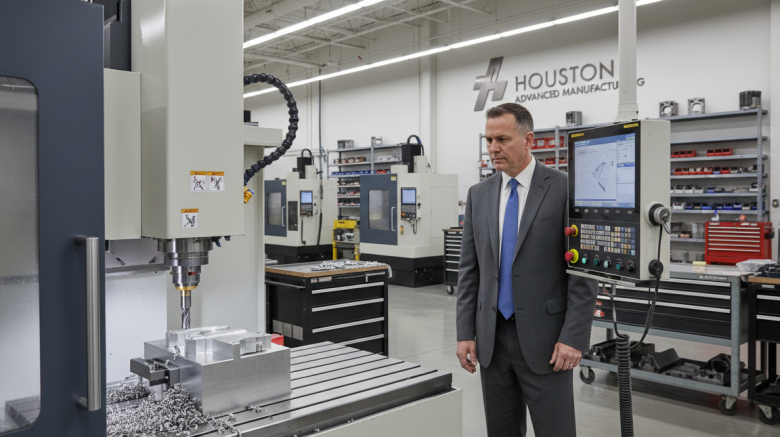
More Than 35% of Texas-made aerospace and energy hardware now are produced with help from CNC milling. That shift has positioned Houston an important center in industrial machining. Regional fabricators and product engineers often prefer regional shops to shorten turnaround times and maintain quality on critical components.
Manual Machining Houston
This article explores CNC Milling Houston and its core capabilities. It outlines how Houston machining services achieve tight tolerances for a wide range of sectors, from petrochemical work to regulated medical components. Whether you need a Houston CNC machine shop for a single test part or repeat production, Houston provides multiple capable suppliers. Area manufacturers operate three-, four-, and five-axis milling, live tooling lathes, and electrical-discharge machining support.
Lowrance Machine is a leading provider of precision work in the area. Contact the team through www.lowrancemachine.com to review your engineering requirements, material choices, and production timing with a partner used to handling demanding prototype-to-production programs.
Main Takeaways
- CNC milling in Houston is a major part of regional aerospace, energy, and medical supply chains.
- Machining services Houston include advanced 3-, 4-, and 5-axis milling plus EDM and live tooling.
- Choosing a regional CNC machining partner can reduce delays and simplify project coordination.
- Lowrance Machine manages small-run and scalable production requirements with certified quality systems.
- Evaluate shops on equipment, materials expertise, and capacity for scalable production.
Why Houston Is A Hub For Precision CNC Milling And Industrial Machining
Houston’s broad industrial base create a regular requirement for close-tolerance machined parts. Energy, petrochemical, aerospace, and biomedical companies require parts with controlled dimensions and traceability. This demand creates opportunities for local machine shops to provide prototypes, assemblies, and repeat orders.
Thousands of manufacturers in the Houston area form a deep manufacturing network. Machine shops can work alongside local specialty vendors for finishing, thermal processing, and quality checks. The local ecosystem reduces delivery delays, enabling quick engineering revisions for complex components.
Houston remains a major base for oilfield equipment manufacturing, with direct access to pipelines and the Port of Houston. Houston’s shipping and freight strengths support the delivery of large or heavy components to global markets. The transport network serves both prototype and large-scale production needs.
NASA’s Johnson Space Center and a thriving aerospace cluster of over 150 companies create steady demand for flight-ready parts and test equipment. Precision milling teams in Houston find consistent work in machining fixtures, aircraft brackets, and medical components. That type of work require precise surface finishes and complete inspection records.
The area’s manufacturing support system supports high-capacity Houston machining services. Ready access to raw-material suppliers, tooling companies, and metrology labs reduces transport times. This efficiency is valuable for oil, gas, and life-science industries, where rapid part qualification matters.
Houston CNC Milling
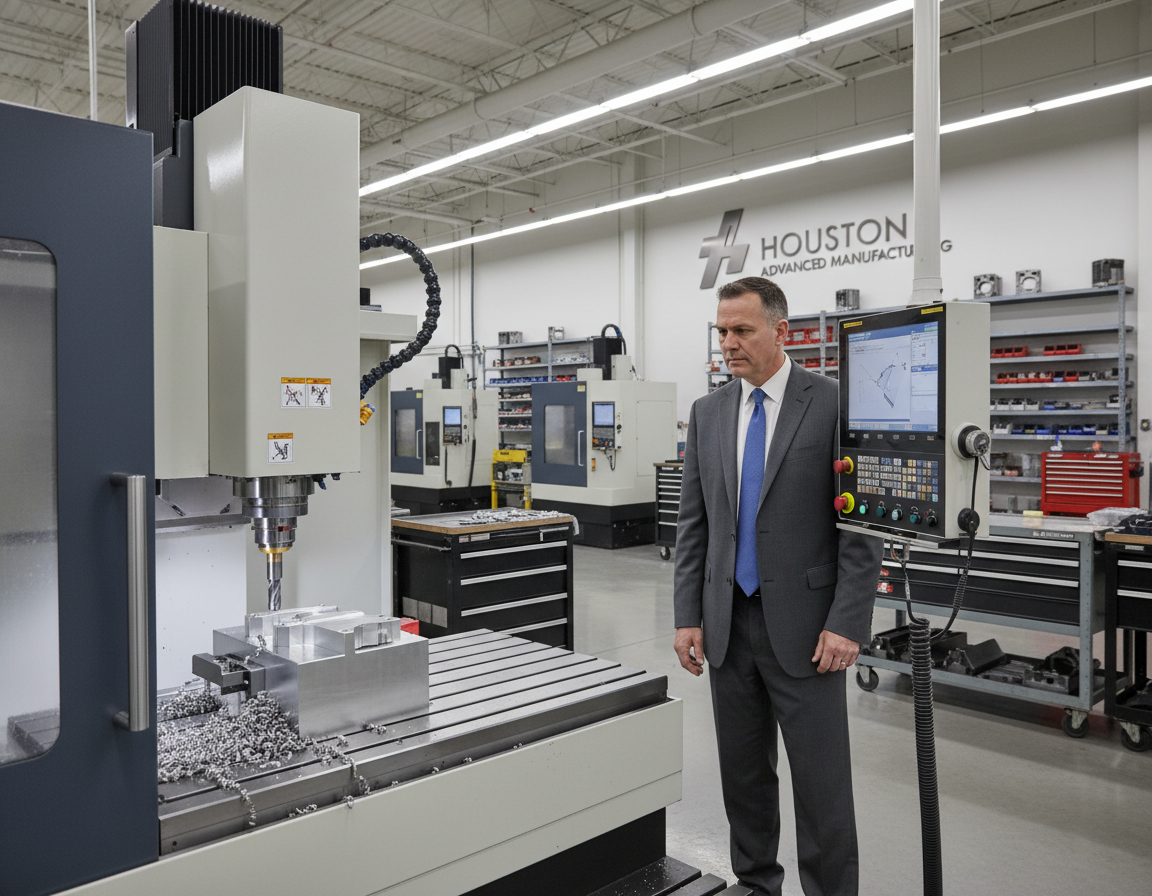
CNC milling turns digital designs into close-tolerance alloy and polymer parts. The process relies on computer-controlled 3-, 4-, and 5-axis mills. Houston shops employ optimized CAM strategies and fast spindle systems to produce tight tolerances and smooth finishes. Those capabilities support regulated and heavy-industry components that need accuracy and small-feature control.
The most advanced facilities integrate multi-axis mills with rotary tables. This setup supports difficult profiles to be produced with fewer setups. It reduces changeovers and compresses turnaround for prototype jobs and production batches. Live tooling and high-speed machining allow shops to machine detailed features and small radii with precision.
What CNC Milling Means And What It Can Do
CNC milling relies on programmed tool movement to machine stock with accurate end mills and cutting tools. Multi-axis control enables coordinated motion on multiple controlled axes. This supports the machining of undercuts, deep pockets, and compound angles in one operation. Modern cutting paths like adaptive clearing and trochoidal milling support chip control and cutter life.
Typical precision shops in Houston work toward tolerances suited to high-spec aerospace and medical requirements. Close-tolerance machining uses thermal compensation, rigid spindles, and machine probing for in-process inspection. This equipment help ensure parts maintain repeatable dimensions and stable geometry across repeat runs.
Common Equipment And Capacity In Houston Machine Shops
Area CNC machining operations deploy machines from established brands such as Haas, DMG MORI, and Mazak. DMG MORI NVX and NLVX equipment enable 4-axis work with rotary tables for medium-to-large parts. Investments in models like the NVX 7000 help shops move from prototype to full production.
Oversized machining platforms support heavy or oversized workpieces for subsea parts and pressure housings. Shops emphasize machines that hold accuracy on large parts, using heavy-duty tables and gantry structures. The larger work envelope reduces the need to outsource large parts and keeps quality control local.
| Machining Capability | Common Hardware | Primary Benefit |
|---|---|---|
| Multi-axis milling | DMG MORI and Mazak multi-axis platforms | Difficult geometry with fewer setups |
| Large-format machining | Gantry mills, Bridge-type centers | Precision work on large components |
| Live tooling & turning | Turn/mill centers, live-tool lathes | Fewer handoffs through combined turning and milling |
| High-speed spindles | High-speed spindle units | Improved finish with shorter cycles |
| In-process measurement | Machine probes and in-process metrology | Immediate verification of critical features |
Complementary services in a full-service CNC machine shop Houston include CNC lathe machining Houston for shaft, bore, and diameter work. Using both turning and milling limits workpiece movement and compresses the complete production cycle.
Choosing a Houston-area provider with advanced machines from known builders helps engineers meet tight specs and speed up project schedules. Good fixturing, optimized tooling, and modern machine tools form the core of competitive CNC milling Houston services.
Precision Manufacturing Services Offered By Lowrance Machine
Lowrance Machine is focused on moving projects from prototype through production, with attention to tight tolerances, reliable delivery, and inspection records. The shop provides a mix of automated CNC work and manual machining skill, supporting small batches, difficult components, and compliance-focused sectors. Its team blends modern automation with hands-on skill to hold precision requirements and delivery schedules.
Comprehensive CNC Milling And Machining Services
As a trusted CNC machine shop in Houston, the Lowrance Machine team provides CNC milling, turning, and assembly support. It supports multi-axis milling, live tooling turning, and long-bed turning for long components. Electrical-discharge machining support enable precise internal features that are not always practical with conventional tooling.
Gun drilling plus BTA drilling handle diameters from one-quarter inch through 3.75 inches and deep bores for long-bore applications. In-house secondary operations include heat treat, plating, powder coat, and paint so components can arrive ready to assemble. Those finishing options cut waiting time and simplify supplier management.
Houston manual machining services are useful for fixtures, jigs, and small production quantities. Hands-on specialists handle close fitting, trial assembly, and individual part changes that work alongside automated machining. This mix of automated and manual processes helps with rapid prototyping and smooth transition to production.
Quality Systems And Certifications
Lowrance Machine’s quality approach focuses on documented processes and strong inspection practices. The team uses CMM checks, SPC records, and probe EDM verification to ensure repeatable results. That inspection structure serve buyers in regulated and industrial supply chains that need documented compliance.
Local shops in Houston commonly use recognized quality standards such as ISO 9001:2015 and AS9100D to prove their focus on controlled processes. Midway Machine is an example of a regional shop holding ISO 9001:2015 and AS9100D certification, which illustrates common expectations across the market. The Lowrance Machine workflow is structured to similar industry standards to support supplier audits and customer requirements.
| Support Area | Capabilities | Customer Advantage |
|---|---|---|
| CNC Milling | 3- to 5-axis milling, high-speed spindles, hardened material strategies | Detailed shapes, close tolerances, and repeatable production |
| Turn/Mill Support | extended turning, live-tool cutting, and multi-turret capacity | Fewer setups and efficient short-to-medium runs |
| Wire EDM And Probe EDM | wire EDM plus probe EDM checking for internal geometry | Small-feature detail, clean finishes, and hardened-steel support |
| Gun And BTA Drilling | Gun/BTA drilling 0.25″–3.75″, extended length options | Repeatable long holes and better part performance |
| Hands-On Machining | manual fitting, fixture work, and assembly checks | Fast prototypes and practical adjustments |
| Inspection And QA | CMM checks, statistical records, and documented inspection | Improved traceability and fewer quality escapes |
| Secondary Finishing Support | thermal processing, coatings, paint, and zinc phosphate | Parts ready for assembly, fewer subcontractors |
Selecting a machining partner that blends full-service machining services Houston options with disciplined inspection controls shortens delivery time and helps prevent production surprises. Lowrance Machine blends modern CNC machine shop Houston technology with skilled machining professionals to serve prototype work, repeat production, and compliance-driven buyers.
Houston CNC Machine Shops: Materials And Industries Served
Machine shops in Houston work with a wide range of metallic materials and specialty plastics. Local providers handle tight dimensions and rugged operating conditions. By combining manual skills with automated processes, they deliver parts for both rugged sectors and high-accuracy markets.
Below is a detailed look at typical materials plus the industries that depend on them.
Materials Houston Shops Commonly Machine
Alloy steels and carbon steels are important in industrial energy applications, becoming pressure housings and valve bodies. Corrosion-resistant stainless steel is chosen for its corrosion resistance and cleanability.
Aluminum and copper-family alloys are used for components needing light weight, strength, and electrical or heat transfer. Nickel-based materials handle hot, corrosive, and demanding service environments in offshore and refinery applications.
Engineering plastics like PEEK, Delrin, and UHMW are selected for parts needing low-friction movement and abrasion resistance. They are valuable for assemblies requiring weight reduction, chemical resistance, or smooth motion. Hands-on machining in Houston makes possible manual adjustment of difficult plastics and nonferrous materials, helping ensure the finished fit, finish, and function.
Industries Served And Example Applications
Oilfield operators and suppliers require subsea hardware, valve bodies, and pressure housings. Those components require large-capacity cutting, alignment control, and documented inspection.
Defense and aerospace customers request test fixtures, brackets, and flight-related hardware with high standards. CNC Milling Houston providers ensures controlled GD&T requirements on difficult aircraft components.
Medical device and biomedical manufacturers use approved metals and engineered plastics. They also require clean handling plus documented inspection. A reliable machine shop in Houston supports batch traceability and stronger documentation for regulatory compliance.
Industrial, marine, and agricultural producers also benefit from precision CNC machining. They need pump parts, custom tools, and corrosion-resistant fittings. A broad material range such as Midway Machine lists meets regional demand, covering ferrous metals, nonferrous metals, nickel alloys, and engineered polymers. These are used across aerospace, biomedical, subsea, energy, marine, and agricultural sectors.
Capabilities That Strengthen Lead Time And Quality
Current-generation Houston machine shops are revolutionizing turnaround times and component quality with modern equipment plus cleaner production flow. High-speed multi-axis mills, heavy horizontal centers, and long-bed lathes reduce production bottlenecks. This setup, combined with on-site finishing plus metrology, creates more predictable delivery and quality for customers across several markets.
Advanced Milling And Turning Equipment
High-speed multi-axis mills with rotary positioning enable engineers to create difficult shapes with fewer operations. That cuts cycle time and minimizes errors. These strengths are essential for CNC milling in Houston serving industries with strict tolerances.
Large horizontal machining centers, like the Okuma MB-8000H platform, machine large, dense workpieces. These machines can support up to 4,400 pounds and provide generous table sizes. This can mean a single run can consolidate work that might otherwise be split. Long-bed turning Houston capacity is supported by lathes like the Okuma LB-style platforms, machining extended shafts, tubes, and housings up to very long between-center lengths.
Live-tool turning equipment supports milling operations on turning centers. This reduces part handling, reduces cycle time, and helps prevent setup mismatch. Shops specializing in CNC lathe machining Houston use live tooling to machine mixed-geometry parts in fewer operations.
Efficiency And Finishing Options For Production
Manufacturing efficiency increases when Houston CNC milling equipment is paired with well-planned fixtures and tool-change automation. Automation such as pallets and gantry loaders allow equipment to keep producing while technicians stage the next job. That creates more throughput with steadier delivery dates.
Internal finishing services reduces external wait times. Typical choices include heat treating, plating, powder coating, painting, and zinc phosphate. One-stop Houston machining services helps customers get assemblies ready for installation without coordinating multiple vendors.
| Equipment Capability | Representative Equipment | Typical Benefit |
|---|---|---|
| High-speed multi-axis milling | Haas and DMG Mori five-axis platforms | Complex shapes in one setup with better finish |
| Heavy horizontal machining | Okuma MB-8000H horizontal center | Fewer setups for heavy components |
| Extended-bed turning | Okuma LB series, Doosan Puma | Production support for long cylindrical components |
| Live-tool lathes | Okuma live-tool turning platforms | Fewer operations for mixed-feature parts |
| Internal finishing | Heat treat ovens, plating lines, powder coat booths | Reduced outsourcing and more predictable finish quality |
Choosing suppliers with this breadth of machinery compresses schedules and supports consistent output. When a project needs accuracy and quick delivery, partnering with shops that offer Houston CNC lathe machining, CNC Milling Houston, Houston machining services, and long-bed turning delivers significant gains in schedule and product quality.
What To Look For When Choosing A Houston Machining Service
When selecting a shop, match technical capacity to the needs of the part. Ensure the part size capacity, table load, and axis configuration can handle your components. This is critical for big components, where machines like long-bed lathes or large gantry mills are often required. Check the vendor’s ability to machine complex geometry with multiple axes for compound surfaces and live tooling for mixed turned and milled features.
Then review the vendor’s process experience. Ask about wire and probe EDM, gun/BTA deep-hole drilling, and manual machining services Houston for special jobs, repairs, or one-off work. A shop with this process mix shows flexibility in both prototype and production environments.
Check the quality-management systems and measurement tools in place. Confirm recognized quality certifications such as ISO 9001:2015 or AS9100D and coordinate measuring machines, comparators, and traceable measurement tools. Midway Machine’s certification profile exemplifies aerospace-grade quality management in the area.
Evaluate the vendor’s reply time and quote detail. Detailed quotations with clear assumptions that identify fixtures, machine time, and quality checks point to solid front-end engineering and quoting discipline. A vendor willing to support prototypes and scale to production suggests a longer-term supplier relationship.
Value one-stop-shop services to reduce lead time and simplify cost control. On-site heat treatment, plating, and finishing lower outside-vendor risk and simplify logistics. A single-source process helps with controlling schedules for CNC Milling Houston and related machining work.
Build a short checklist to compare candidates’ capacity and equipment. Confirm maximum part size, spindle power, available axis configurations and whether they provide full Houston CNC machine shop capability plus manual machine-shop services in Houston for mixed production needs.
Lastly, prioritize clear communication and traceability. Regular updates, documented inspections, and a single point of contact make complex jobs easier to manage. Selecting a Houston machine shop should feel like adding an engineering partner and not just a vendor.
Machine Shop Houston Project Cost, Lead Time, And Scalability
Understanding the cost and lead time is important to technical and procurement teams. Cost and schedule are shaped by material choice, part complexity, and required surface finish. Clear specifications are important to clear supplier estimates.
Factors Affecting Price And Timing
Choice of material significantly impacts both price and cycle time. For example, aluminum is often faster to machine than stainless steel, which can change tool wear and affect cycle time. Complex geometries and deep cavities also increase production duration. Follow-up processes like cryogenic deburring, anodizing, or coatings extend delivery dates and add handling expense.
Quantity strongly changes unit cost. A single prototype incurs programming, setup, and planning costs. In contrast, repeat batches distribute those costs over many parts. Larger production work supports dedicated tooling and fixtures, lowering per-part machining time. Clear CAD/CAM files and defined tolerances make estimates more accurate and reduce delay in supplier responses.
Moving From Prototype To Production
Moving machining from prototype to volume depends on controlled equipment, fixtures, and inspection steps. Providers like Lowrance Machine invest in multi-axis equipment and high-capacity milling platforms. This type of capacity supports quality during production ramp-up, limiting uncertainty in transitioning from prototypes to production.
Cost-saving strategies include live-tool machining, better toolpaths, and purpose-built fixtures. These steps decrease transfers and machining duration per component. Specifying materials and coatings that avoid extra finishing cuts overall cost. CNC milling in Houston, when applied smartly, can eliminate secondary operations by consolidating operations into fewer setups.
Quoting and lead-time commitments require precise information. Give the shop complete models and drawings, clear tolerance callouts, and acceptance of suggested process optimizations. Strong communication with a Houston machine shop shortens iteration loops, leading to clearer delivery dates and better cost control.
| Driver | Impact On Cost | Lead-Time Impact | Mitigation |
|---|---|---|---|
| Material (aluminum vs stainless) | Aluminum is usually cheaper to machine; stainless may raise tool and run costs | Harder materials often increase machining time | Review alternate materials that meet function but cut faster |
| Component complexity and features | Detailed geometry raises CAM, setup, and run expense | Complex features can add production time | Use multi-axis CNC Milling Houston and consolidate setups |
| Tolerances and finish | Strict specifications increase QA and machining cost | Demanding finishes and tolerances add QA time | Balance tolerance to function; limit fine finishes where possible |
| Order volume | More parts can lower per-piece price through amortization | Bigger runs may need more fixture prep but reduce each-part time | Schedule batches so fixture and tool costs are spread effectively |
| Additional processing steps | Coatings, thermal processing, and plating raise total cost | Each operation adds transit and queue days | Select material/process combos that reduce secondary steps |
| Manufacturing optimization | Better CAM and fixtures reduce per-part cost | Better processes shorten machining cycles | Use machining services Houston expertise to improve CAM and fixturing |
Conclusion
Houston’s manufacturing scene is perfect for CNC milling projects in Houston needing accuracy and quick turnaround. Houston providers use advanced equipment from brands like Okuma and DMG MORI. These shops may also support long-bed lathes, live tooling, EDM, and in-house finishing. This setup allows for quick movement from prototype to production.
As you select a CNC machine shop in Houston, review specifications, expected quantities, and inspection requirements. Look for certifications like AS9100D or ISO 9001. Clear quotes and transparent lead-time estimates are important for preventing delays. They help ensure the chosen shop can support your work as quantity or complexity increases.
When you need machining services in Houston that include secondary finishing plus assembly help, evaluate the whole workflow and the shop’s communication. The Lowrance Machine team supports the complete path from first article through repeat production. Its staff can provide capability reviews and project quotes to support your dimensional needs and schedule goals.
Related: Local Schema Markup for SEO Houston